Signed in as:
filler@godaddy.com
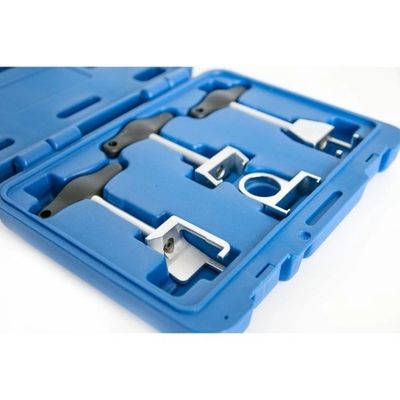
NUMBER GM2701
4 PIECE SET
Four Piece Set (4) Application-specific puller tools designed especially for installation and removal of ignition coils, essential for spark plug/coil service on later direct-injection engines where coils stick badly. Prevents damage to ignition coils, allowing quick removal. The set contains four different puller heads (or forks/claws), each shaped to match specific ignition coil designs found in various VW/Audi engines. Common equivalents to OEM tools include:
T10094A style (often for many 4-cylinder engines)
T10095A style
T10166 style
T40039 style (frequently for VR6, some V8/V10/V12, or certain DI/direct injection configurations)
See details below.

GM2701 (details for the set above)
#0282 same as T10094a
Primarily for 1.2L, 1.4L, and 1.6L petrol engines (FSI/TSI and earlier),
including models like:VW Polo, Golf (MK5/MK6),
Beetle, Bora/Jetta, Passat, Touran, Caddy, Fox, Transporter T4/T5
Audi A1, A3 (8P), and equivalents in Seat/Skoda (e.g., Fabia, Octavia)
This is an updated version that replaces the older T10094
#0285 SAME AS T10095a
For ignition coils with final output stage.
Common Applications: Primarily for 2.3L V5 and 3.2L V6 engines (including VR6 variants from 2002+) also used on some 2.8L VR6 & other multi-cylinder setups.
Fits many VW/Audi models like:VW Golf, Bora/Jetta, Passat, Sharan, Touareg,
Phaeton, Transporter T5, R32 Audi A3, TT, A4, Q5, etc.
#0283 SAME AS T10166
Primarily for 1.8L/2.0L (especially TFSI/TSI) engines, but also used on higher-cylinder setups including W8 (8-cylinder) and W12 (12-cylinder) engines. Fits many VW/Audi models such as:VW Passat (early W8), Phaeton (W12), Touareg, Golf/R32, Bora/Jetta, Polo
Audi A3, A4, A6, TT, and equivalents in Seat/Skoda.
#0284 SAME AS T40039
For Newer or higher-output VAG engines,
including:2.0T/1.8T TFSI/TSI (EA888 Gen 2/3, EA113 series)
Multi-cylinder setups like W8/W12 (Phaeton, Passat W8), some 3.0T/3.2L/4.2L
Also fits certain Porsche (e.g., Cayenne 3.0T) and some Lamborghini Urus coils
Models: Audi A3/A4/A5/A6/A8/Q5/Q7/TT,
VW Golf MK7/GTI, Passat, Touareg, Phaeton; equivalents in Seat/Skoda.
NUMBER T10050X6
6 piece set for TDI
Includes both main components T10100 and T10050
Compatible with VW Audi SEAT Skoda with 1.9L 2.0L TDI PD DOHC diesel engines. Compatible with Audi A2/A3/A4/A6, Skoda Octavia II, VW Golf, Golf Plus, Jetta and Touran models. The diesel engine camshaft locking tool kit is used to install and remove diesel engine camshaft-variable camshaft timing unit. Helps check and adjust engine timing easily and effectively.
Audi: AMF, ASZ, ATD, AVB, AVF, AWX, AXR, AZV, BHC, B
C, BKD, BKE, BLB, BMN, BNA, BPW, BRB, BRC, BRD, BRE, BRF, BUY, BVA, BVF, BVG;
Volkswagen: AJM, AMF, ANU, ARL, ASZ, ATD, AUY, AVB, AVF, AWX, AXR, BAY, BMS, BNM, BNV, BWV; Compatible with Seat: BJB,BKC, BLS, BMM, BXE;
Compatible with Skoda: AMF, AZV, BKD.
Contents: T10100, T10050, T10008, T10060A, T10115, 3359

NUMBER T10100SET3
Three engine timing tools for Volkswagen and Audi TDi PD V6 engines
T10100: Locks the crankshaft in place at the oval crankshaft pulley when adjusting the valve timing (TDC marking at 1 o'clock) on 4-cylinder diesel engines (1.9L and 2.0L, 2 and 4-valve).
3359: Pin to test diesel fuel pump timing on diesels with a divided pump gear. TDI Diesel, ECO Diesel.
For Polo 1995 and earlier, Golf, Jetta 1992 and earlier, Passat 1988 and earlier, VW: AAZ, ALH, BEW, BHW 10/94 and later.
T10008: Plate to lock tensioning roller on adjustable types beginning with 8/2000 engine models AUG & AWM. Engines: AUG, AWM, AEB, ATW, AMB, BEW

NUMBER T10050SET3
Three engine timing tools for Volkswagen and Audi
T10050 Locks the crankshaft in place during timing belt replacement on 2004-2010 VW TDI Pump Duse engines (BEW, BHW, BRM, CBEA, and CJAA) with round pulleys (038105263F and 045105263A). It is also used on newer VW 2.0L Turbo Diesel engines (BHW, CBEA, and CJAA).
T10008 LOCK PLATE to lock tensioning roller on adjustable types beginning with 8/2000 engine models AUG & AWM.
For Engines: AUG, AWM, AEB, ATW, AMB, BEW
3359 DIESEL PUMP PIN to test diesel fuel pump timing on diesels with a divided pump gear. TDI Diesel, ECO Diesel.
For Polo 1995 and earlier, Golf, Jetta 1992 and earlier, Passat 1988 and earlier, VW: AAZ, ALH, BEW, BHW 10/94 and later.

NUMBER VW170
Air Cooled Oil Filler Tool
Special socket same as old VW tool number 170
(sometimes mentioned as VW-170 or just 170) is a classic special service tool for air-cooled Volkswagen (like Type 1 Beetle, Karmann Ghia, Bus).
Special socket/wrench designed to remove and install the outer threaded retaining ring/nut that secures the oil filler neck (or breather tower/box) to the crankcase or alternator/generator stand.
This threaded ring can be tricky to grip without damaging it, so the tool has pegs or pins that engage the notches/slots on the ring for proper torque without slipping.It's commonly used when replacing the oil filler assembly, gaskets, or upgrading to aftermarket breathers.

NUMBER MK-4471
Vintage VW Tool (US 4471)
Volkswagen special service tool number US-4471 (or 4471 in some manuals)
for older Volkswagen repair.
This is a rare, older specialty tool made by Zelenda (a brand that produced OEM- equivalent and dealer tools for VW/Audi in the US market).
This is a camshaft adjusting tool (or camshaft sprocket/gear adjustment wrench/holder) specifically designed for adjusting or holding/aligning the camshaft timing on certain classic VW models from the 1970s–1980s, particularly:
VW Dasher (North American version of the Audi 80/Passat B1 platform)
VW Fox (early models, though some overlap with later years)
Related Audi models of similar vintage (like the Fox/Dasher equivalents)
There were water-cooled inline engines (often the 1.5L–1.7L EA827 family or similar), where precise camshaft timing was critical during belt/chain service, valve adjustments, or head work.
This tool's design—with the angled/curved arm, flat blade-like section, and threaded/bolted knob—allow it to engage the camshaft sprocket teeth or notches while providing leverage or a holding point to rotate or lock the cam in position without damaging components.
NUMBER 95740
Krikit Tension Gauge Automotive
This gauge provides a simple and quick way to measure V-ribbed belt tension on passenger cars, light trucks, heavy trucks and buses to ensure long belt life and optimal belt drive performance.
Porsche 911 (1989-1998)
Porsche 993 Carrera, Carrera S, Carrera 4, Carrera 4S and Targa (1995-98)
Calibrated to measure tension from 100 to 320 lb., and 50 to 150 kg.
Measure belts up to eight ribs in width
Note: Not for use on timing belts
Note: Installation only by a trained professional for the intended application.
Improper installation can result in serious safety risks.
TOOLss. com does NOT provide any installation or troubleshooting advice (besides any material that may come with purchased item)
NUMBER 3400SET2
Multi-Spline socket plus Long XZN tool
Two tools consisting of the 19mm Multi-Spline short socket (3400)
and Longer XZN style socket size M10.
For mounting and dismounting the alternator pulley
(V-belt pulley/slip clutch pulley) at the alternator (some older manuals call it a generator). The short serrated socket is 19mm outside diameter and 30mm long.
The long tool is XZN triple-square socket with 1/2 drive and 5.5 inches long.

NUMBER 3316
Radio Removal Tool Set (2)
Special service tools consisting of a pair of radio removal keys (also called radio release tools or extraction keys) designed specifically for Volkswagen
(and some Audi) factory head units. Tools safely release the locking clips on double-DIN or single-DIN factory radios, allowing the unit to be pulled straight out of the dashboard without damage. Insert the two identical keys into the slots on either side of the radio face until they click/engage, then pull evenly on the handles to extract the radio. Primarily for late 1990s to mid-2000s VW models with vertically aligned release slots, including: Golf/Jetta (MK3/MK4, ~1998–2005)
Passat (B5/B5.5, ~1998–2005)
New Beetle
Touareg (early models)
Some Audi models sharing similar Blaupunkt/Becker/VW radios.
(Note: Newer models often use different tools like four-pin keys or no tools at all.)

NUMBER T10060A
Lock Pin for V-Belt
Superseded T10060 and 3204
Insert this pin (4mm diameter) into the hydraulic or mechanical tensioner for the ribbed V-belt (serpentine/accessory belt) to lock it in a depressed or fixed position. This allows safe removal, installation, or replacement of the serpentine belt without the tensioner springing back or losing tension
Primarily for engines with ribbed V-belts/accessory drives, including:1.8L/2.0L TSI/TFSI (EA888 family, e.g., CCTA, CBFA codes) in models like VW Golf/GTI/Jetta/Passat/CC/Tiguan (2006–2018), Audi A3/A4/A5/Q5/TT.
Various older 1.8T, 2.0L, V6 engines (codes like AEB, ATQ, BBD, BEV).
Also seen in some TDI setups (1.6/2.0 TDI EA288) as part of timing kits, but mainly for accessory belt tensioner.
Common across many VW/Audi models from ~1990s–2010s where serpentine belt service requires tensioner locking.

NUMBER 7670-00
VW/AUDI DSG OIL FILTER WRENCH
24mm 12 point tool
Offset wrench services VW/Audi DSG oil filter housing caps (TFSI, TSI)
Saves time Loosen/tighten the filter housing cap (plastic or metal) so you can replace the internal filter element during a DSG fluid & filter service — typically recommended every 40,000 miles (64,000 km) on most VW DSG models.
Stubby offset design for easy access
Many forums report that a regular or deep 24mm 12-point socket with an extension can work in a pinch (especially on certain models), but this offset design strongly preferred because it can save a lot of time and frustration by avoiding battery removal.

NUMBER T30094SET
Engine Timing Tool Set 3 Pieces
VW T30094 Camshaft setting/locking plate is a special engine timing tool used across several Volkswagen Group brands (VW, Audi, Seat, and Skoda). It is primarily used for aligning and locking the camshafts during timing belt or chain maintenance.
Common Applications: Primarily found in timing kits for 2.5L V6 TDI diesel engines (this set appears in various VAG timing tool cross-references for larger diesel and some gas configurations).
Purpose: It ensures the camshaft stays in the exact position relative to the crankshaft while the timing belt or chain is removed, preventing engine damage and ensuring the valve timing remains perfect.
Heavy-duty hardened steel to prevent bending under tension.
Why you need it
If you are performing a timing belt service on a V6 diesel, using this tool set is non-negotiable. Without it, the camshafts can "jump" or rotate slightly due to valve spring pressure once the belt is loosened. Even being one tooth off can lead to poor performance, "limp mode," or in worst-case scenarios, piston-to-valve contact.

NUMBER 20955
3 Pc Set Heavy Duty XZN Socket Set
Tools are all 1/2 inch drive.
Includes: M14, M16 and M18 XZN style (with tamper-proof hole in the tip).
A handy set for working on VW, Audi, and Porsche vehicles.
Volkswagen, Audi and Porsche cars use XZN bits and sockets for a variety of applications.
Triple square sockets can be difficult to come by at most auto parts stores and nothing will ruin your day quicker than having to drive around town trying to find them.
You get all three tools with this set.

NUMBER 3359-OEM
3359 TDC Pin
Crankshaft locking pin (TDC pin) inserts into a hole in the engine block to lock the crankshaft at TDC, preventing it from rotating while you work on the belt.
This tool is commonly used on older 1.9 TDI and similar VW/Audi diesels, including engine codes such as:ALH, BEW, BHW, AAZ, and others.
Vehicles: Golf, Jetta, Passat, Polo (pre-1995 in some cases), and equivalent Audi models. This tool also appears in service procedures for some PD (Pumpe Düse) and certain common-rail TDI engines, and can double as a camshaft locking pin in specific applications. Always check the exact engine code and service manual for your vehicle, as tool usage can vary.
Note: Newer VW TDI engines (post-~2008/2009) often use different locking tools (e.g., T40098, T10100, etc.), so 3359 is most relevant for 1990s–early 2000s diesels.
Tips for Use
Always rotate the engine manually (never with the starter) when the pin is inserted.
Remove the pin before attempting to start the engine.
If the pin won’t insert easily, double-check that the pump is exactly at the correct timing position — forcing it can damage the pump or hole.
Pair it with the correct crank and cam locking tools for a complete job.
NUMBER 4491-DBL
Open Side Diesel Injector Socket (22mm)
Special cut-away on both sides of the socket to allow access for removal and replacement of diesel injectors without damage to the fuel lines.
This 22mm socket is designed specifically for removing and installing diesel fuel injectors in tight or confined engine spaces, particularly where fuel lines, wiring, or other components would otherwise obstruct a standard closed socket.
This tool has a distinctive cutaway/open side (a slot or window on one or both sides of the socket body). This allows the socket to slide over the injector while clearing attached fuel lines, high-pressure pipes, or electrical connectors without disconnecting them first—preventing damage and saving time.
Drive: 1/2-inch square drive
This type of socket is popular for diesel engines on vehicles from brands such as: Mercedes-Benz (e.g., OM604, OM605, OM606 engines)
Actros, Motor 457 / 541 / 542, Ford Maverick 2,7 TDI, Nissan Terrano TD 2,5L / 2,7L, Opel Corsa 1,5D / 1,7 TD, Isuzu. Volkswagen (VW Polo, etc.)
Ford, Mitsubishi, Nissan, Vauxhall/Opel, and various light trucks/commercial vehicles.
The open-side feature is essential because many modern diesel injectors have rigid fuel lines or sensors attached directly to the top, making standard sockets unusable without risking bent lines or stripped fittings.
Length: 3.1/4″ (80mm).

NUMBER 3289-VW
VW Tool 3289 special service tool from Volkswagen/Audi (VAG group)
Designed as a Brake Pedal Release Tool specifically used to disconnect the brake pedal from the brake booster (also called brake servo). The brake pedal connects to the booster's pushrod via a plastic socket and ball joint. This tool safely releases that connection without damaging the plastic clip or components.
This procedure is common during:
Brake booster (servo) replacement
Brake pedal cluster or master cylinder work
Related repairs on many VW and Audi models (especially older ones like Mk3 Golf/Jetta, but it applies more broadly in the VAG lineup)
How It Works
The tool is positioned to engage the connection point.
You pull the tool together with the brake pedal toward the rear (driver's seat direction). This separates the brake pedal from the ball-head of the pushrod.
Some mechanics note that with the steering linkage disconnected and the rubber boot removed from the firewall, you might improvise with screwdrivers, but the official tool is recommended to avoid breaking the plastic retainer or causing damage.
Initial use: Volkswagen Golf and Vento from 1992 onward (Mk3 generation.
This tool was introduced in the early 1990s for separating the brake pedal from the brake booster pushrod.
The tool is part of the official Volkswagen/Audi (VAG group) special tool catalog and is widely used across many VW, Audi, SEAT, and ŠKODA models that share similar brake pedal-to-booster ball joint designs. It applies to vehicles with the common plastic socket / ball-head connection at the firewall. It is commonly needed on: Volkswagen — Mk3 Golf/Jetta (1993–1999), Mk4 Golf/Jetta/Bora (1999–2005), many Passat (B4/B5), Beetle (1998–2010), and similar era models. Also referenced on some later models where the same connection style is used.
Audi — Various A3, A4, and related models from the same platform era (exact fitment varies; some newer models from ~2007–2008 onward may use updated designs or different tools like CTA 1437).
Other VAG brands —SEAT and ŠKODA models on shared platforms (e.g., early Octavia, Ibiza, etc.).